
A feasibility study closes on a decision, argued against criteria set at the outset.
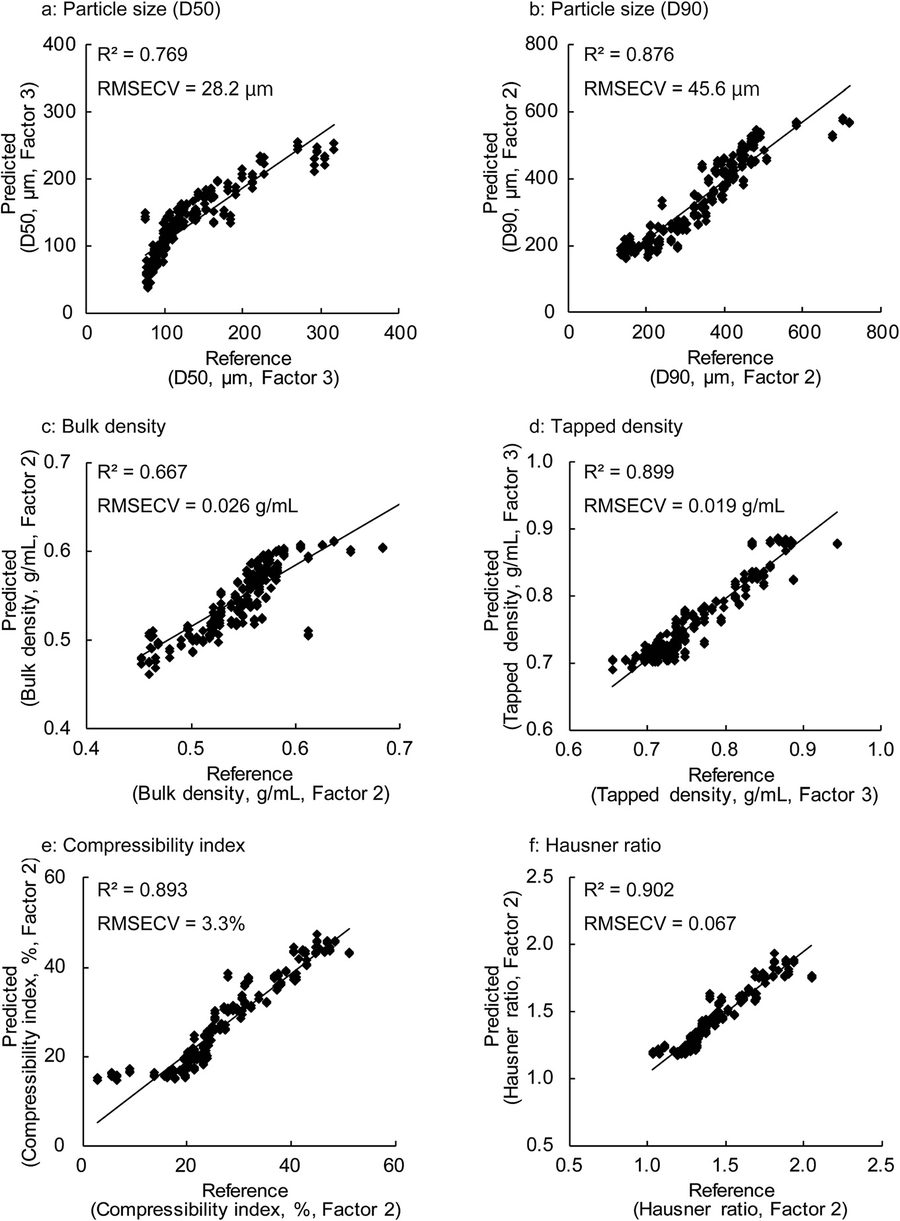
A flattering correlation, and a report silent on the number of batches, the reference used and what production would still need. Three questions to put to any feasibility study, ours included.
A proof of concept must be able to conclude either way
A demonstration shows that the instrument works. A proof of concept exists to decide: its protocol sets out, before the trials, the path to a “no”, which saves the installation and months of modelling.
The criterion is not answering yes, but being able to decide, and to defend it to a third party.
What separates a proof of concept from a demonstration
It has seen the real variability
A method is tested in production by the atypical batches, never by the average one. The batch whose raw material came from another supplier, the one that dried more slowly, the one with an incident. Having seen a difficult batch sometimes means waiting for one, and it is what makes the result hold.
It validates on batches it has never seen
Cross-validation on samples from a single batch flatters the figure, sometimes heavily: those samples share everything the model should be learning to ignore. The validation that informs runs on batches the model has never met. What the sample-count question really covers.
It runs at pilot scale or on the process
Temperature at the measurement point, vibration, ambient light, window fouling, how the sample presents itself to the probe. On a bench the sample is still, clean and reproducible. In line it is none of those, and presentation alone can dominate the signal. We therefore run the proof of concept at pilot scale or on the process wherever access allows.
And it hands back its data. You will leave with the complete data set and the performance obtained, so the result can be checked by a third party, stays usable if the supplier changes, and feeds tomorrow’s model. Spectra acquired today are an asset.
What is settled before the first spectrum
Written into the protocol at scoping:
- The question, in one sentence: “can we stop the drying earlier?”, not “can we do NIR?”.
- The success criterion, set in figures before the trials.
- The samples: how many, over how many batches.
- The reference method and its uncertainty.
- What follows, whether the answer is yes or no.
What the study asks of you
The main effort is often your laboratory’s: every sample in the model has to carry its reference value. To be settled together at scoping:
- How many analyses, over how many batches. How the number is decided.
- Who runs them, your laboratory or an external one.
- What access to the line: production time, measurement point, Quality’s agreement.
Your case can be assessed in forty-five minutes. Book a call.
The milestones, one by one
This sequence is established practice in the trade, whichever technology is put to work.
| Milestone | What happens | What comes out |
|---|---|---|
| Initial consultation | Mapping the flows, the critical attributes, the existing reference methods and the mechanical access. | Success criteria, agreed and quantified. A feasibility opinion, which can already be negative. |
| Proposal | The scoping turned into a protocol: samples, acquisition plan, reference method, planned processing, deliverables. | A protocol you can argue with line by line, before committing anything. |
| Trials | Acquisition on your samples, in the agreed conditions. Pre-processing compared, models built, validation on data never seen. | The models, their performance, and an inventory of what bounds them. |
| Report | Presented to your teams, with the reservations: what is demonstrated, what is not, and what more it would take. | The complete data set and the performance obtained, handed to you. |
The milestone that decides is the first one. A proof of concept that begins with acquisition has skipped the question.
Why running on the process changes the timeline
It is the point on this page with the heaviest consequences, and the one we are asked about least.
A model built on the bench is rebuilt at deployment: another scale, another presentation of the material, another variability. That means a fresh sample campaign, line time and a fresh delay, on a budget already partly spent on a demonstration that no longer serves.
A model built at pilot scale or on the process is not rebuilt. It comes out of the proof of concept usable, or very close to it, and what remains at deployment changes in nature: qualification, documentation and progressive widening of the domain take over from modelling.
What “already usable” covers, and what comes after
It does not yet mean validated. Four work streams follow: qualifying the installation and its operation, writing the method dossier, defining what happens when the measurement leaves its domain, and getting the whole accepted by quality. What a method has to demonstrate.
Nor does it mean the model is final. A new supplier, a new season or a recipe change bring variability it has not seen, and that variability is added to it. The difference is that you complete a model that works instead of starting one from nothing.
And it presupposes access: production time, a usable measurement point, and sometimes the agreement of quality if the product is commercial. Where that access does not exist, we say so at scoping, and the model is then built to be transferred to scale.
What really sets the pace
A first step settles whether the signal exists. That is a physical question: does the quantity leave a usable trace in the spectrum, or does it sit inside the scattering and temperature effects. The answer comes quickly and it is plain. Many projects conclude here, before costing much.
A second builds a criterion that holds from one batch to the next. That means having acquired on genuinely different batches, which depends on the production rhythm as much as on the modelling. Below a handful of batches a model interpolates inside what it has seen. The production calendar sets this pace, not the speed of the instrument.
When the answer points elsewhere, four routes stay open
It happens. Four possible next steps, and none of them consists of insisting.
- Reformulate the question. Measure a state rather than a value. If predicting an absolute content calls for reference values you do not have, detecting a stabilisation is often still possible. And it sometimes answers the real need, which was to know when to stop. See what calibration burden your measurement imposes.
- Move the measurement point. A probe looking at a dead zone or a fouled wall faithfully measures material that is not the one that counts. The defect is one of position, not of technology, and no instrument performance corrects it.
- Change technology family. A fluorescent matrix, a very aqueous medium, a signal too weak in the useful band. These are physical reasons, and another technology sometimes answers them. That is the value of not being tied to a single one.
- Document what the trial established. The written conclusion, with the data that support it, avoids running the same study again in three years. The cases are detailed in what makes a measurement hold.
Two studies, and what they settled
A study whose conclusion concerned the trial plan
On gelatin shells, the question asked was brittleness, a mechanical defect that appears at packaging. Each shell gave its spectrum. But the reference method called for a minimum mass: about ten shells to obtain a single value.
The lock was therefore physical, not organisational. You cannot titrate a single shell, whereas you scan it without difficulty.
The model was set aside, and that was the right decision. It must, however, be said precisely why: it was not evaluated, it could not be. The difference between two shells of the same group existed nowhere in the references. No mathematical treatment gets out of a model information that the reference does not contain.
It is therefore not a conclusion about feasibility. It is a conclusion about the trial plan. The next step goes through a reference value paired with each spectrum, at least on a subset, to know the real dispersion between units. It is that subset that will say what the measurement can aim for, and it is decided before the first acquisition. Why sampling counts more than the instrument.
A measurement moved from reflection to transmission
On a powder flow in pneumatic conveying, the reflection measurement was conclusive in static conditions. In dynamic conditions it degraded, and the cause was not the instrument. On a dilute flow, the density of material presented at the window is insufficient: there is not enough material in front of the window.
The route goes through transmission between two windows, where the material crosses the beam instead of sending it back. It is a change of configuration, not of technology. And that is why a feasibility study is done on the process and not on a bench.
These two cases show what a study produces when it concludes on another route: a physical reason, and the reformulated question that does have an answer. That is what you take away, and it is what keeps its value when the project resumes two years later.
Frequently asked questions
Does an instrument have to sit on our site for the whole study?
It depends on the milestone. A first comparative acquisition can be done off site on samples you send, which separates two technology families without tying up the line. As soon as the point is to demonstrate a measurement in motion, the instrument belongs on the process, and the duration follows the number of batches to cover. It is a protocol parameter, agreed at scoping.
Is a high correlation coefficient enough to conclude?
It is the easiest indicator to make flattering. A high coefficient obtained on three or four distinct reference values links a few points rather than a population. What to read together: the number of distinct reference values, the coverage of the range, the prediction error relative to that range, the number of latent variables, and the behaviour on validation batches. A model needing many latent variables to hold is a sensitive model.
Do the proof of concept results carry over to deployment?
In part, and this is often under-anticipated. Spectra acquired off line and spectra acquired in line on the same product are not interchangeable. Presentation, matrix effect and process conditions introduce a systematic offset on their own. Merging the two sets is done with the appropriate treatment, and the passage from one to the other is prepared during deployment.
Does a successful proof of concept allow batch release?
Not on its own. It demonstrates technical feasibility. Between that and release sit a complete analytical validation, a control strategy and a dossier. Aiming at that use changes the design of the trials, and it is decided beforehand.
Next phase — Deploy, integration
Tell us which decision you have to take. We will tell you what has to be proven to take it.
Forty-five minutes is enough to frame the question, to identify the success criterion that would mean something at your site, and to estimate the samples and batches it would take to answer.